


What Happens Inside Your Humidor in the First 48 Hours Will Surprise You
Every serious cigar collector knows the feeling, you invest in a beautifully crafted box, fill it with premium sticks, and weeks later the wrappers are cracking and the draw is off. The culprit? An unseasoned humidor. Before a single cigar touches that Spanish Cedar lining, the wood must be properly conditioned. This guide on how to season a humidor walks you through everything: the science, the step-by-step methods, the troubleshooting, and the long-term care that separates casual smokers from true connoisseurs.
Whether you're storing your first Cohiba or Montecristo or building a serious rotation of the best Cuban cigars for beginners, getting the seasoning right is not optional, it is the single most important thing you will do for your collection.
Have questions or need a personalized humidor recommendation? Reach out to our team at info@migratorycigar.com — we're ready to help.
Quick Answer: How to Season a Humidor
Seasoning a humidor means slowly raising the moisture content of the kiln-dried Spanish Cedar interior to a stable relative humidity (RH) of 65%–72%. This prevents the dry wood from pulling moisture directly out of your cigars.
The most reliable method is placing Boveda 84% RH packs inside the empty humidor for 14 days without opening it. A faster alternative is the wipe-down method using distilled water, which takes 2–5 days. Both methods work — the key difference is precision versus speed.
Why Unseasoned Wood Is Your Cigars' Worst Enemy
To understand seasoning, you first need to understand the material. Spanish Cedar is the wood of choice in quality humidors for good reason — it repels tobacco beetles, enhances aroma, and manages moisture beautifully.
But there is a catch. Cedar used in manufacturing is kiln-dried to remove moisture for stability during shipping and production. That means the wood arrives in your home essentially dehydrated and extremely thirsty.
When you place cigars into an unseasoned humidor, that dry cedar immediately begins pulling moisture from whatever is nearby and your cigars are the closest source.
The result is cracked wrappers, unraveling binders, and a smoke that burns hot and harsh. A brand-new uncharged humidor can drop internal humidity to below 50% RH within 48 hours.
Understanding the history of Cuban cigars helps explain why Spanish Cedar became the gold standard; it absorbs and releases moisture gradually, acting as a natural humidity buffer once properly charged.That buffering effect is exactly what you are creating during the seasoning process.
Before You Begin: The Two Non-Negotiable Preparation Steps
Step 1 — Calibrate Your Hygrometer First
Your hygrometer is your most important tool throughout this process, and an uncalibrated one will give you false confidence. A reading of 70% that is actually 62% could cost you an entire box of premium cigars.
The most reliable calibration method is the Salt Test. Place a small amount of table salt in a bottle cap, add just enough water to make a damp paste (not liquid), and seal it in a zip-lock bag along with your hygrometer for 6–8 hours.
At equilibrium, a perfectly calibrated hygrometer will read exactly 75% RH. If yours reads 72%, you know it reads 3% low — and you adjust all future readings accordingly.
Digital calibration kits are also available and offer more precision for serious collectors.
Step 2 — Perform the Dollar Bill Seal Test
Before seasoning, check that your humidor actually seals properly. Slide a dollar bill into the lid and close it. If you can pull the bill out without resistance, air is escaping.
A humidor with a poor seal cannot hold consistent humidity no matter how well you season it. Look for visible light gaps, warped lids, or a loose hinge.
If you discover your box is leaking, it may be time to upgrade. Browse our curated Humidor Set & Cigar Accessories in Hong Kong for quality humidors that pass this test from day one.
Method 1: The 14-Day Boveda Method (Recommended for Beginners and Experts Alike)
This is the hands-off, high-precision approach. It uses Boveda 84% RH seasoning packs — two-way humidity control sachets containing a saturated salt solution — to slowly bring the cedar to the perfect moisture level without any risk of over-wetting or warping.
What you need: Boveda 84% packs (one per 25-cigar capacity), your empty humidor, and patience.
Start with a completely empty humidor. Remove any trays, dividers, or accessories. Place the appropriate number of Boveda 84% packs directly on the cedar floor and on any removable cedar trays. Close the lid firmly and do not open it for 14 full days. That is it.
The science here is elegant. Boveda packs release moisture until equilibrium is reached — the state where the air and wood are in perfect balance — and then they stop. There is no overshooting, no mold risk, and no guesswork. A 100-cigar humidor typically needs four packs; a 50-cigar box needs two.
After 14 days, remove the 84% packs and check your hygrometer. You should see a reading between 68%–72%. Add your cigars and switch to your preferred Boveda maintenance packs — most collectors use 69% or 72% RH depending on personal preference and climate. In Hong Kong's humid subtropical environment, 69% is often the sweet spot.
In Hong Kong's humid climate, 69% is often the sweet spot.
This is the approach we recommend to every client at Migratory Story. Questions about which pack size is right for your box? Contact Us Now.
Method 2: The Traditional Wipe-Down Method (Faster, Requires More Attention)
The wipe-down method has been used by cigar aficionados long before Boveda packs existed. Done correctly, it works beautifully. Done carelessly, it warps wood and breeds mold.
What you need: A brand-new, unscented sponge, distilled water, a small plastic bag, and your hygrometer.
This is critical — always use distilled water, never tap water. Tap water contains minerals and microorganisms that will leave deposits and encourage mold growth. This mistake is irreversible. Distilled water is inexpensive and widely available.
Dampen (do not soak) your sponge with distilled water and wring it out until it is moist but not dripping. Gently wipe down all interior cedar surfaces — the walls, the lid lining, and any removable trays — using long, even strokes. Once wiped, place the damp sponge on top of a plastic bag (to prevent direct water contact with the wood) inside the closed humidor.
Check your hygrometer daily. Over 2–5 days, the reading will climb. You may see it spike above 80% initially — this is completely normal as the wood absorbs the initial surge of moisture. Do not panic and do not open the lid repeatedly. Once it drops and stabilizes between 65%–70% for two consecutive days, your humidor is seasoned and ready.
A note on propylene glycol (PG) solution: Some seasoning kits include a PG solution instead of distilled water. PG solution has a self-regulating property that helps maintain 70% RH and resists mold growth. It is a reliable alternative to plain distilled water and worth considering if you are in a particularly humid environment like Hong Kong.
The "Charging" vs. "Seasoning" Debate: What Professionals Actually Say
You will hear both terms used interchangeably in cigar circles. Charging a humidor is the professional synonym for seasoning — it refers to the act of introducing moisture into the dry cedar to bring it to a working humidity level. Some purists argue that "seasoning" implies a one-time process, while "charging" implies an ongoing relationship with the wood. In practical terms, they describe the same initial process.
What matters is understanding that kiln-dried wood is intentionally stripped of natural moisture during manufacturing. Charging simply restores it to its natural working state. Think of it like seasoning a cast-iron pan — you are not changing the material, you are unlocking its full capability.
Troubleshooting: What to Do When Things Don't Go as Planned
- Humidity spikes above 80%: This is normal in the first 24–48 hours of the wipe-down method. Leave the humidor closed. The cedar is absorbing the initial moisture load. It will drop naturally. If it stays above 80% for more than five days, remove the sponge and leave the lid slightly ajar for a few hours.
- Humidity stays below 60% after 5+ days: This usually indicates one of two problems — either your humidor has a significant seal issue (revisit the dollar bill test), or your hygrometer is reading incorrectly. Recalibrate first. If the seal is the issue, a beeswax sealant can be applied to the interior lid joint to reduce leakage.
- White spots appearing on the cedar: Stop immediately. This is the earliest sign of mold, almost always caused by tap water or a sponge that was not clean. Wipe the affected area with a fresh cloth dampened with distilled water, allow it to dry completely in a ventilated space, and restart the seasoning process from the beginning using only distilled water or Boveda packs.
- Hygrometer fluctuates every time you open the lid: This is expected behavior, not a malfunction. Every time you open the lid, ambient air enters. A properly seasoned humidor will recover its target RH within 30–60 minutes because the charged cedar acts as a humidity buffer — releasing or absorbing moisture to return to equilibrium. This is exactly why the seasoning process matters so much.
Long-Term Humidor Maintenance: The 70/70 Rule and When to Re-Season
Seasoning is not a one-time event. It is the beginning of a long-term relationship with your humidor.
The industry standard for cigar storage is the 70/70 rule — 70°F (21°C) and 70% RH. In practice, many collectors in warmer climates like Hong Kong prefer 65%–68% RH to reduce the risk of tobacco beetles, which become active above 72°F. The goal is consistency, not a perfect number.
Check your hygrometer every 1–2 weeks. Refill or replace your humidity source (Boveda packs, sponge, or PG solution) when readings begin to drop below 65%. Boveda packs typically last 2–4 months depending on how often you open the lid and the ambient humidity of your space.
Signs it's time to re-season: Your humidor consistently struggles to hold humidity above 62% even with fresh humidity sources; the cedar looks visibly dry or lighter in color; you have not used the humidor for several months and left it empty. An empty humidor left unsealed for extended periods will lose its charge and must be re-seasoned before use.
What to Stock Once Your Humidor Is Ready
Once your humidity has stabilized for 48 hours at your target RH, your humidor is ready to receive cigars. This is the moment that makes all the patience worth it.
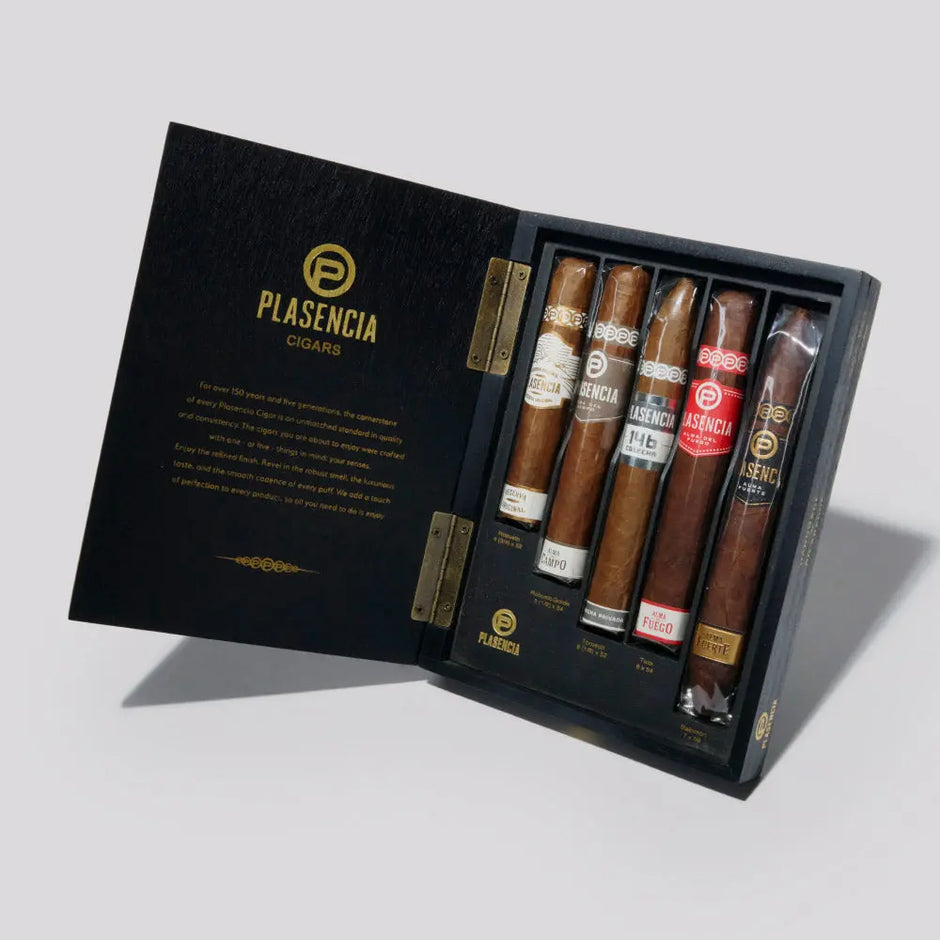
For new collectors, a cigar sampler is the ideal first load — it lets you explore different profiles without committing to a full box of any single vitola. If you are already familiar with your preferences, explore our full Cigar Hong Kong Collections including premium Cuban production cigars and boutique selections curated for the discerning Hong Kong palate.
A well-seasoned humidor isn't just a storage tool — it is a statement piece. Much like the curated items in our lifestyle objects collection, it reflects a standard of taste and care that true enthusiasts recognize immediately.
Frequently Asked Questions
How long does it take to season a humidor?
Using the Boveda 84% method, allow a full 14 days for best results. The traditional wipe-down method takes 2–5 days but requires daily monitoring.
Can I use tap water to season a humidor?
No. Tap water contains minerals and microorganisms that cause mineral deposits and mold. Always use distilled water exclusively.
Do I need to re-season my humidor every year?
Not necessarily. If you maintain consistent humidity and use your humidor regularly, re-seasoning is only needed if the humidor has been stored empty for months or is struggling to hold humidity despite fresh moisture sources.
What is the difference between the Boveda method and the wipe-down method?
The Boveda method is slower (14 days) but precise, hands-off, and virtually risk-free. The wipe-down method is faster (2–5 days) but requires daily monitoring and carries a higher risk of mold if done incorrectly with tap water.
Why does my humidity spike to 80% initially?
This is normal during the wipe-down method. The kiln-dried cedar absorbs moisture rapidly at first, causing a temporary spike. It will settle naturally. Leave the lid closed and give it time.
Final Thoughts: The Difference Between a Cigar Stored and a Cigar Preserved
Learning how to season a humidor is the first act of respect you show to every cigar you will ever store. The process takes patience — but so does growing, rolling, and aging a great cigar. The 14-day wait for a Boveda-seasoned humidor is nothing compared to the years spent crafting what's inside it.
Collectors who choose between a Cohiba and a Montecristo already understand that detail makes the difference. The same logic applies to how you store them. A cracked wrapper on a $50 cigar is not bad luck — it is a preventable mistake.
Do it right once, maintain it consistently, and your humidor will reward you for years.
Ready to build your setup?
Our team at Migratory Story — Hong Kong's trusted cigar shopping destination — is here to guide you from your first humidor to a fully curated collection.
Email us for a Custom Recommendation: info@migratorycigar.com
Browse our collections:
- Cigar Accessories HK — Hygrometers, Boveda packs, and premium humidors
- Cigar Hong Kong Collections — Premium Cuban and boutique selections
- Cigar Samplers — The perfect first load for a freshly seasoned humidor
- Humidor set & Cigar accessories – Everything you need to season, maintain, and stock your humidor.
🕙 Support Hours: Monday – Friday | 10AM – 6PM (Excluding HK Public Holidays)
Have questions about shipping or your recent order? We're always happy to help — just drop us a line at info@migratorycigar.com or simply Contact Us Now!


